Guide
Orthodontic appliances, and what actually differs
Metal, ceramic, lingual and clear aligners do not only differ in how visible they are. Range of use, cost and daily upkeep differ too.
Four broad choices
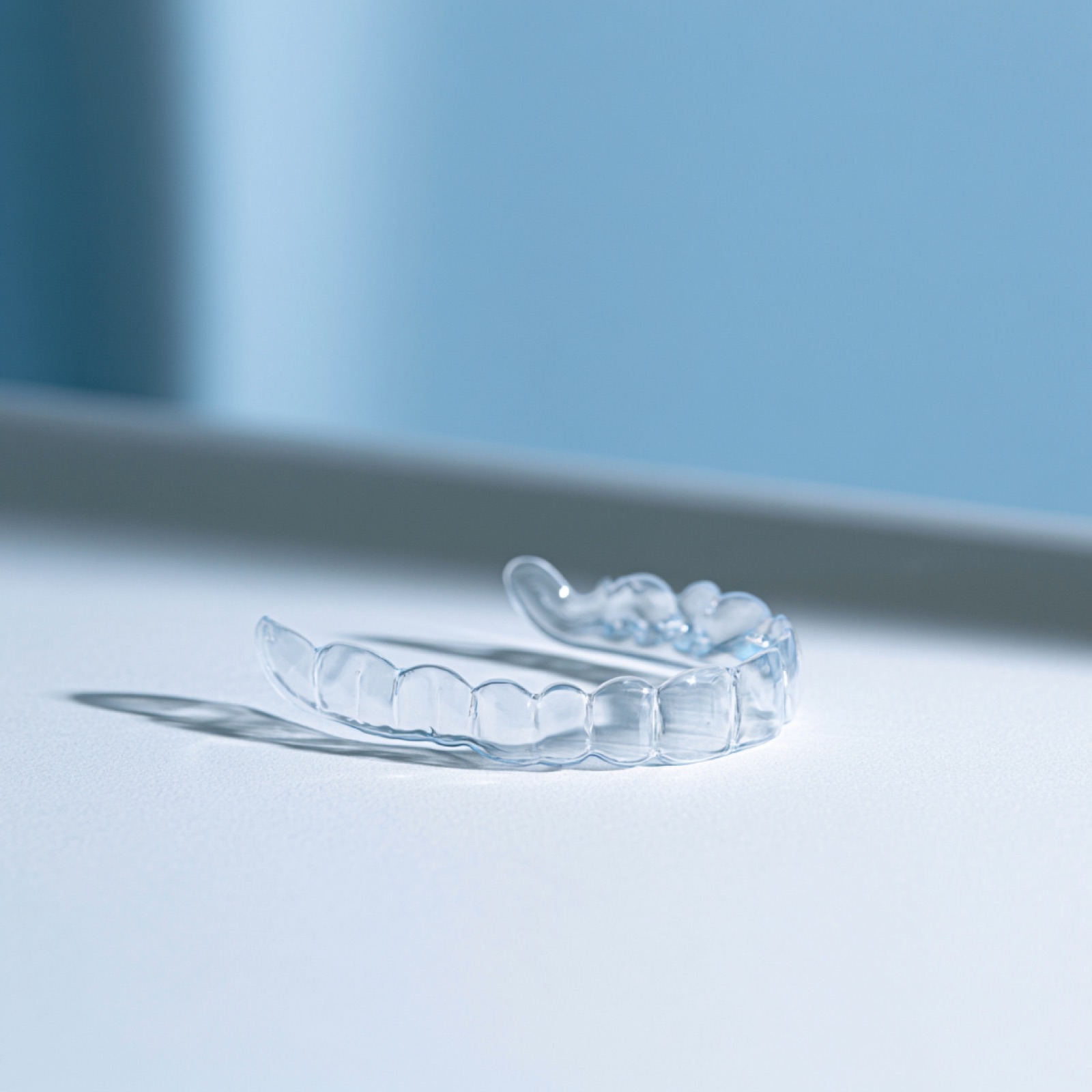
Everything splits into fixed brackets and removable aligners. Brackets come in metal, ceramic (tooth-coloured) and lingual (bonded to the inside surfaces); aligners are clear trays swapped out in stages.
Brackets stay bonded to the teeth, so the appliance is working all the time. Aligners have to be worn twenty hours a day or more to move teeth as planned. Choosing an appliance is partly about appearance and partly about being honest with yourself about your habits.
Where the differences sit
On range of use, brackets often have the advantage where movement is large or awkward — rotation, extrusion. Mild alignment corrections are achievable with aligners. On appearance, lingual and clear come first, ceramic sits in the middle, and metal is the most visible.
On cost, metal is generally the baseline, with ceramic, clear and lingual rising from there — though clinic and case vary a great deal. On upkeep, brackets bring trapped food and harder brushing; aligners bring wear-time discipline and the risk of losing a tray.
The plan comes before the appliance
The same appliance produces different results under a different plan. Rather than "can I have clear aligners?", ask "what are the advantages and disadvantages of each appliance in my case?" A good consultation walks through those differences with your records on screen.
The test is whether the proposal starts from your diagnosis, not from an advertisement built around a particular appliance brand.
FAQ
Frequently asked
Can clear aligners handle every case?
No. Where movement is large or extractions are involved, brackets often have the advantage. Whether aligners are viable is settled by a full diagnostic work-up — what matters is that the reasoning is explained.
How many hours a day do aligners need to be worn?
Twenty to twenty-two hours is the usual instruction — out only for eating and brushing. Fall short and the teeth do not move as planned, which stretches the timeline.
Are ceramic brackets weaker than metal?
The material makes fracture relatively more likely and they are somewhat bulkier. In exchange they are far less visible. Confirm the re-bonding cost if one breaks.
Why is lingual treatment more expensive?
Bonding to the inside surfaces makes both fabrication and adjustment more demanding. Ask about the speech adjustment period at the consultation as well.
Do appliances differ in how much they hurt?
Every appliance brings a dull ache early in each movement. Brackets typically rub the soft tissue; aligners feel tight right after a tray change. Most people adapt within a few days.
Can I switch appliance mid-treatment?
Sometimes, but it can mean revising the plan and paying more. Before starting, be realistic about whether your daily routine allows the wear time an aligner needs.
When are partial braces an option?
For a narrow problem such as mild crowding of the front teeth. Even then, the bite as a whole can be affected, so a diagnosis has to confirm that it really is a partial case.
How do I compare appliance prices?
Not on the appliance fee alone. Convert each quote to total = diagnostic fee + appliance + monthly adjustment × expected visits + retainers, and compare on the same basis.
Updated 2026-08-20
Related